Autogyros Part I: The Golden Age

Many of you who know me know that I like autogyros. Many of you probably have no idea what an autogyro is or how it works. Since such is the case, I have decided to write a post which will, if read, defeat your ignorance on the subject.
The first question you are probably thinking is, "What is an autogyro?" An autogyro is a rather unique aircraft that has wings that spin around an axis like a helicopter. However, an autogyro does not provide power from the engine to the rotor. Instead, the rotor is tilted back slightly and the air rushing through it makes it spin like the wind rushing through a windmill. as it spins the wings produce lift.
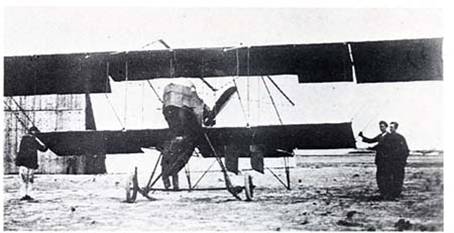
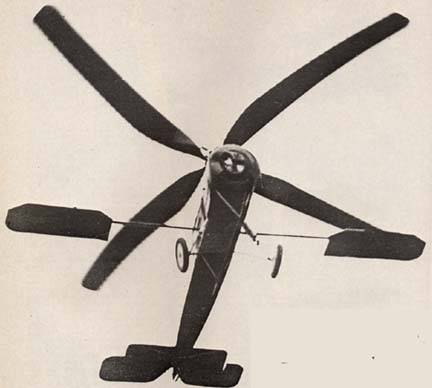
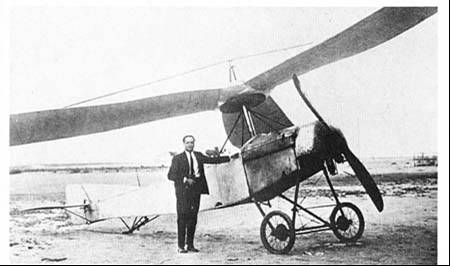
Concerning its history, where do I start? With Da Vinci, or Lilienthal, or the Wright brothers? For the time being I think I will skip all these aeronautical pioneers whose discoveries led to the autogyro and skip right to the inventor, a Spaniard by the name of Don Juan De La Cierva. Cierva, who was born on Sept. 21, 1895, started to become interested in aviation at the first demonstration of the Wright brothers in France in 1908; and by 1912 he was flying a modified Sommer biplane which he called the BCD-1. In 1913 he built a monoplane but could not keep it in the air. Again in 1918 he built an airplane, this time a large bomber. Though it flew successfully, it was stalled out and wrecked during military trials in June of 1919. Following this catastrophe, Cierva started to search for an aircraft that would not stall. He is said to have found the answer from a toy helicopter which he watched flutter slowly from a balcony to the ground. His first attempt at rotary winged flight was the C-1. It featured dual overhead rotors with rotor heads that held the blades in a fixed plane, and gussets for even more rigidity. Unfortunately it never flew because the dual rotors caused too much interference with each other. However, Cierva was not one to give up. His next two tries, the C-2 and C-3 which also had rigid rotors, only produced short hops on the ground. It was found that the problem was in the fact that as the rotor spun, one of the blades was moving into the headwind and the other was moving away from it. This generated more lift in the forward moving blade. Cierva fixed this problem on the C-4 by giving it hinged rotor blades (articulated) that could tilt in such a way as to dump the excess lift. To the C-4 he also added small wings that could be tilted for roll control. After some modification, the C-4 became the first rotary winged craft to fly. During one of the trials, the engine cut out during takeoff and the craft did not have the momentum to remain airborne. Instead of crashing, the autogyro slowly settled to earth proving that there is no stall speed for the rotor.
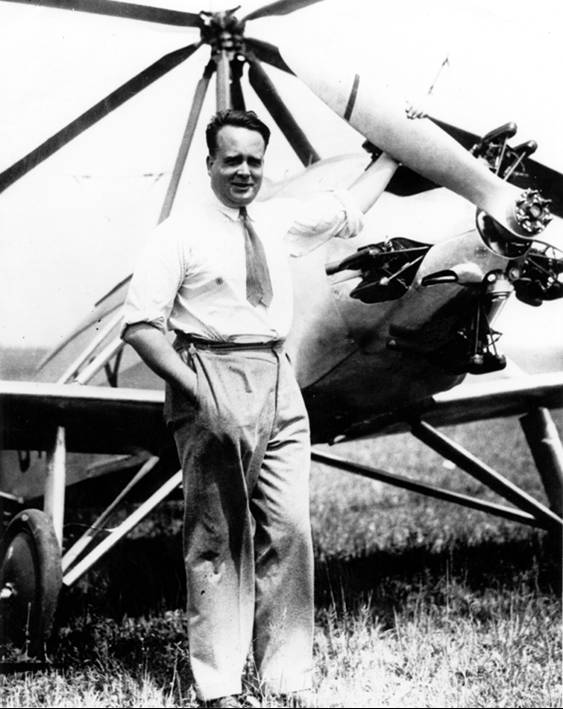


The next big advance came with the introduction of the pre-rotator which gave the craft the ability to take off in shorter distances. Further advancements of this made it possible for the craft to take off in no distance at all. A change came on Aug. 5, 1931when the Wilford WRK, which again had a rigid rotor, became the first autogyro to feature a cyclic pitch control. This acts by changing the angle of each blade independently and thus the retreating blade can be adjusted for a higher angle of attack and thus produce a lift equal to the lift of the forward moving one. Cyclic pitch paved the way for the invention of the jump takeoff. To perform a jump takeoff, an autogyro spins the rotor at high speed with the pre-rotator. The pre-rotator is then released in order to keep the craft from spinning from the torque and drag created by the rotor. After the engine is disconnected from the rotor, the pitch of all the blades (collective pitch) is then directed up and the craft springs into the air. Following this, the collective pitch is adjusted for normal flight and the autogyro must start moving in order to remain airborne.

With these advancements, it appeared that the autogyro would soon rule the skies. However, because they could not hover, the helicopter, which was made possible by the advances of the autogyro, soon became the machine everyone wanted and the market for crafts with unpowered rotors dwindled to nothing. Over the years the several attempts to bring the autogyro back were unsuccessful....
posted by Luke @ 7:18 PM
2 comments

2 Comments:
Very intresting Luke.....can't wait till Part 2!
Nice Luke,So when in the heck are you going to post part2,Ha ha ha?0
How are you?
Post a Comment
<< Home